


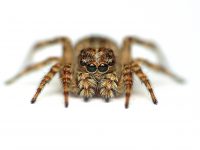
Spider Facts
- Spiders are not insects. Insects have three body parts and six legs. Spiders have eight legs and two body parts, the abdomen and the thorax.
- Spiders have silk spinning glands called spinnerets, at the tip of their abdomen.
- Not all spiders spin webs.
- Spiders belong to the Arachnid family.
- There are more than 30,000 species of spiders.
- Spiders are oviparous, which means their babies come from eggs.
- Most spiders have either six or eight eyes.
- All spiders have fangs, through which venom is ejected. Spider bites can be quite painful, and a select few can be fatal. (The brown recluse spider, Loxosceles reclusa, is common outdoors and indoors in the southern and central United States. It is uncommon to extremely rare in the Upper Midwest. Only one specimen has been recorded in Minnesota (1953, Lake County. MN DNR)***
- Fear of spiders is called Arachniphobia. It is one of the most common fears among humans.
- Tarantulas shed their furry skin as they grow, leaving behind what looks just like another tarantula.
- Spiders eat many types of harmful insects, helping to keep your garden free of pests.
83 AMAZING FACTS ABOUT SPIDERS - click here (fascinating!)
***Spider bites - University of Minnesota Extension
Most people are aware that spiders are very beneficial because they eat insects, still there is much confusion and unwarranted fear of the potential harm spiders might do to people. Spiders rank just behind bees and wasps as the most feared arthropod. It is common for any unexplained skin irritation to be called a "spider bite."
Research has shown that over 80{c55c8048ce70815a53cedbe8c58af6e7018bd1f9249d13e1ed06da752e55b489} of suspected "spider bites" are caused by other arthropods, such as insects and ticks, or other disease states. Of the more than 3,000 kinds of spiders in the United States, about 60 species have been implicated as causing medically significant bites to people. Many spiders are not capable of breaking the skin with their fangs while other species contain venom that causes no reaction. Spiders are usually very timid and will only bite in self-defense if mishandled, cornered, or injured. Even when they bite, spiders do not always inject venom. The severity of the reaction to a spider bite will differ among individuals. Most spider bites are less painful than a bee sting.
Actual spider bites show two puncture marks although the wound is not always obvious. A rather typical reaction may involve localized reddening and various degrees of swelling, itching, and pain. Within a few hours a small red, blue, or black discoloration can develop around the bite site. The area may remain tender for a few days, and eventually a small sore can develop that soon begins healing. Accurate identification of any spider bite can only be made if the spider causing the bite is captured and identified.


